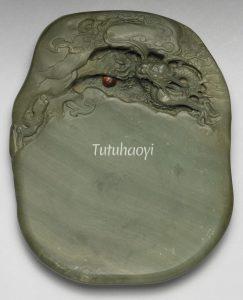
Venerable dragon teaching his son
苍龙教子
© Tutuhaoyi.com owns the copyright of the description content for the images attached. Quoting all or part of the description content on this page is permitted ONLY IF ‘Tutuhaoyi.com’ is clearly acknowledged anywhere your quote is produced unless stated otherwise. (本页描述内容版权归Tutuhaoyi.com所有,转发或引用需注明 “Tutuhaoyi.com”, 侵权必究, 已注开源信息的条目除外。)
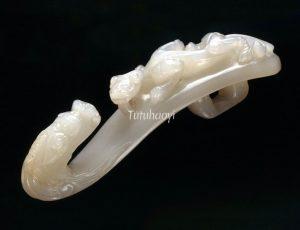
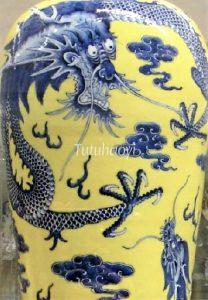
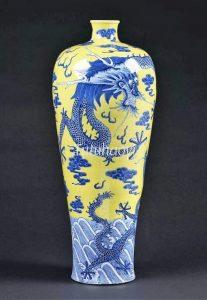
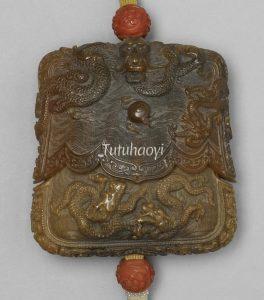
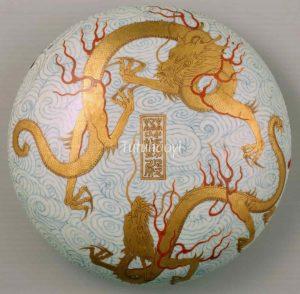
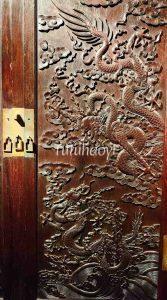
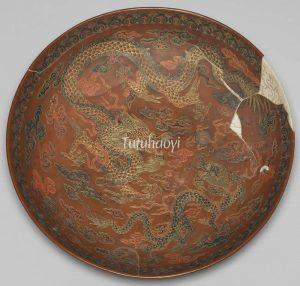
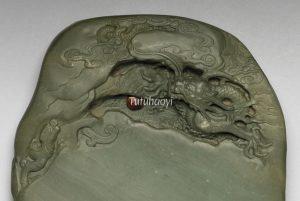
Father’s Day was set up to honour fatherhood and secure paternal bonds. One very potent motif in the repertoire of traditional Chinese pictorial culture in this regard is the image of a magnificent brawny dragon facing a smaller young dragon in the background of cloud and waves. It symbolises the passing of knowledge and experience from one generation to another, which shows how the society and dominant ideology treasure the paternal advice.
Related topics:
May your five sons come out first in civil examinations 五子夺魁
Fig 1: jade carving, Yuan dynasty (1271–1368), courtesy of Wuhan Museum, China
Fig 2: porcelain dish with filled-in gold dragon and cloud decoration on red lacquer, Ming dynasty (1368–1644), courtesy of the National Palace Museum, Taipei
Fig 3-4: Songhua inkstone, Kangxi period (1662–1722), Qing dynasty, courtesy of the National Palace Museum, Taipei
Fig 5-6: porcelain vase with underglaze blue and overglaze yellow enamelled decoration, Yongzheng period (1723–35), Qing dynasty, courtesy of Victoria and Albert Museum, London
Fig 7: rhinoceros horn flint case, 18th century, courtesy of the National Palace Museum, Taipei
Fig 8: gilded porcelain paste box with underglaze blue and overglaze iron-red enamelled decoration, Jiaqing period (1796–1820), Qing dynasty, courtesy of the Palace Museum, Beijing, China
Fig 9: wood carving on a cabinet door, Qing dynasty (1644–1911), courtesy of the Shanghai Museum, China; photography by Rachel Ma