Dog
犬
© Tutuhaoyi.com owns the copyright of the description content for the images attached. Quoting all or part of the description content on this page is permitted ONLY IF ‘Tutuhaoyi.com’ is clearly acknowledged anywhere your quote is produced unless stated otherwise. (本页描述内容版权归Tutuhaoyi.com所有,转发或引用需注明 “Tutuhaoyi.com”, 侵权必究, 已注开源信息的条目除外。)
The character 犬 quan (‘dog’) remains remarkably close to its pictographic origin: a simple yet instantly recognisable depiction of an animal with erect ears and a high curling tail, characteristic of the sturdy chow chow and other common Chinese breeds. Over centuries of script development, the form gradually became more balanced and symmetrical, resulting in the standard character used today.
Dogs have long been held in high esteem in China as loyal guardians and symbols of protection. Traditional belief maintains that being approached by a dog foretells the arrival of great wealth. Emperor Ling of the Eastern Han dynasty (汉灵帝, 156–189 CE) was famously devoted to his favourite pet dog, upon which he conferred the highest scholarly rank, while lesser titles were bestowed upon his other dogs. During the late imperial period, the small lapdogs now known as Pekingese became especially popular at the Qing court in Beijing, then commonly known in the West as Peking.
In northern China, dogs are traditionally regarded as protectors against evil influences. Pairs of Dogs of Fo — meaning ‘Dogs of the Buddha’, also known as lion-dogs — were placed at the entrances of Buddhist temples as guardians. During the Qing dynasty, miniature versions became popular domestic talismans believed to ward off misfortune in homes and other buildings. In southern China, the dog is accorded even greater reverence, particularly among minority peoples such as the Yao, who maintain traditions identifying the dog as an ancestor of humankind.
Despite these positive associations, dogs could also carry ominous connotations in certain regional beliefs. In Taiwan, dead dogs were until relatively recent times often disposed of in water rather than buried, owing to the belief that they might otherwise return as malevolent spirits.
description by Yibin Ni
edited by Rachel Ma
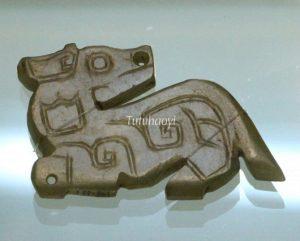
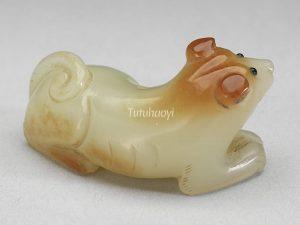
Fig 1: jade dog, Shang dynasty (c. 1500–1050 BCE), excavated from the tomb of Fu Hao in the Yin Ruins, courtesy of Institute of Archaeology, Chinese Academy of Social Sciences
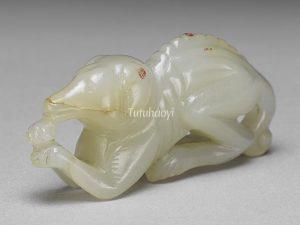
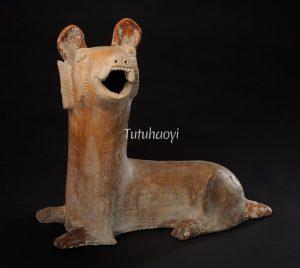
Fig 2: pottery dog with amber-yellow glaze, Eastern Han dynasty (25–220 CE), courtesy of the Palace Museum, Beijing
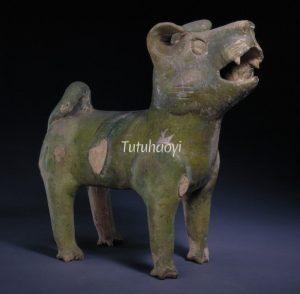
Fig 3: green-glazed pottery dog, Eastern Han dynasty (25–220 CE), courtesy of the Palace Museum, Beijing
Fig 4: jade pendant in the shape of a dog, Song to Yuan dynasty (960-1368), courtesy of the National Palace Museum, Taipei
Fig 5: jade dog, Jin to Yuan dynasty (1115-1368), courtesy of the National Palace Museum, Taipei
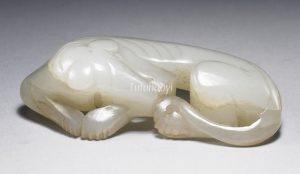
Fig 6: jade dog, Yuan dynasty (1271–1368), courtesy of the National Palace Museum, Taipei
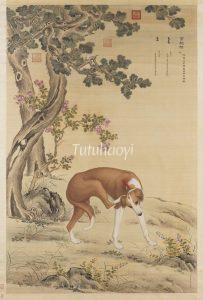
Fig 7: Chin-ch’ih-hsien 十駿犬金翅獫, hanging scroll, ink and colour on paper, Giuseppe Castiglione (1688–1766), courtesy of the National Palace Museum, Taipei
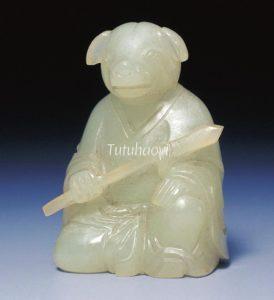
Fig 8: jade dog, Qing dynasty (1644–1911), courtesy of the Palace Museum, Beijing
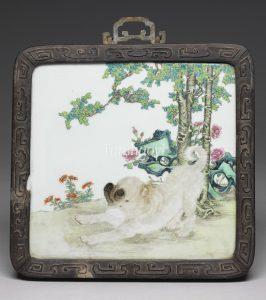
Fig 9: famille rose porcelain plaque, Qing dynasty (1644–1911), courtesy of the National Palace Museum, Taipei
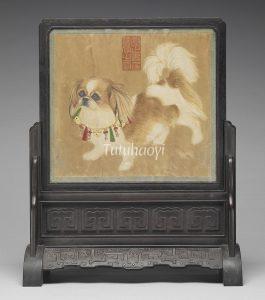
Fig 10: table screen with a painted dog, Daoguang period (1821–50), Qing dynasty, courtesy of the National Palace Museum, Taipei
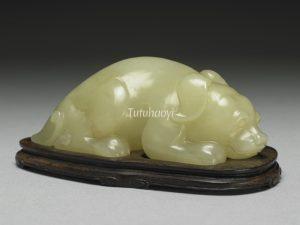
Fig 11: jade dog, Qing dynasty (1644–1911), courtesy of the National Palace Museum, Taipei