Ox
牛

© Tutuhaoyi.com owns the copyright of the description content for the images attached. Quoting all or part of the description content on this page is permitted ONLY IF ‘Tutuhaoyi.com’ is clearly acknowledged anywhere your quote is produced unless stated otherwise. (本页描述内容版权归Tutuhaoyi.com所有,转发或引用需注明 “Tutuhaoyi.com”, 侵权必究, 已注开源信息的条目除外。)
The Chinese character 牛 (niu), meaning ‘ox’ or ‘cow’, remains remarkably close to its ancient pictographic form. The graph represents the frontal view of a bovine head, with curved horns and ears projecting symmetrically from a central axis. As one of the earliest agricultural signs in Chinese writing, it reflects the fundamental importance of cattle in early Chinese civilisation.
In traditional agrarian China, the ox was indispensable to farming. As the principal draught animal for ploughing, it underpinned the rural economy for millennia. Because of this economic and moral value, the slaughter of oxen was often discouraged, and at times formally prohibited by imperial decree. This cultural reluctance to consume beef—later reinforced by Buddhist dietary principles—persisted well into the late imperial period.
The ox also occupied a prominent place in state ritual. Each spring, the emperor personally performed the ceremonial ploughing rite, symbolically initiating the agricultural year. Clad in imperial yellow robes, he guided an ox-drawn plough in a highly choreographed ceremony regarded as one of the most important national rituals of the empire. In local observances, clay models of an ox were ritually struck to encourage the coming of spring and the renewal of fertility.
In terminology, niu functions as a general word for bovine animals, much like ‘ox’ in English. It commonly refers to the so-called ‘yellow ox’, the typical East Asian working cattle. When preceded by the character for water (shui), it denotes the water buffalo (shui niu), especially revered in southern China for its strength and resilience in wet rice cultivation.
Symbolically, the ox represents strength, endurance, diligence, and patient labour. Sculptural representations were also believed to possess apotropaic power. A well-known example is the bronze water buffalo on the banks of Kunming Lake at the imperial Summer Palace in Beijing, installed to stabilise the waters and ward off floods and malign influences.
In religious art, the ox assumes profound metaphorical meaning. The celebrated Ox-Herding Pictures of Zen Buddhism, particularly popular during the Song dynasty (960–1279), comprise a sequence of verses and images depicting a herdsman’s search for a lost ox. In this allegory, the ox symbolises the enlightened mind, and the stages of seeking and taming represent the spiritual path towards awakening.
Across writing, ritual, sculpture, and painting, the ox emerges as both a practical and a symbolic presence—embodying agricultural foundation, moral virtue, spiritual striving, and cosmic order within Chinese visual culture.
literature research by Dr Yibin Ni
Related Figural Stories:
Bing Ji Inquiring about a Panting Buffalo 丙吉问牛喘
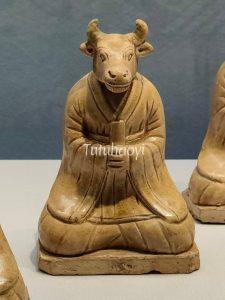
Fig 1: figurine of the Chinese zodiac ox with celadon glaze, Sui dynasty (581–618), unearthed at Guizishan, Wuchang, Hubei province, courtesy of the National Museum of China, Beijing; Photograph by Rachel Ma
Fig 2: Five Oxen (五牛图), handscroll, ink and colour on paper, Han Huang (韩滉 723–787), Tang dynasty (618–906), courtesy of the Palace Museum, Beijing
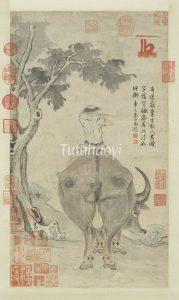
Fig 3: Depiction of an Ox (画牛图), hanging scroll, ink and colour on paper, Dai Song (戴嵩 ?–?), Tang dynasty (618–906), courtesy of the National Palace Museum, Taipei
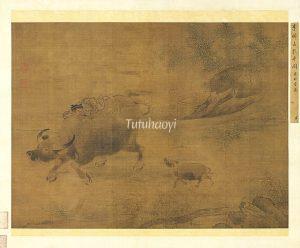
Fig 4: Oxen (乳牛图), hanging scroll, ink and colour on paper, Li Tang (李唐, around 1050–1130), Song dynasty (960–1279), courtesy of the National Palace Museum, Taipei
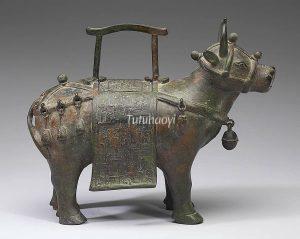
Fig 5: Zun wine vessel in the shape of a buffalo, after Song dynasty (960- ), courtesy of the National Palace Museum, Taipei
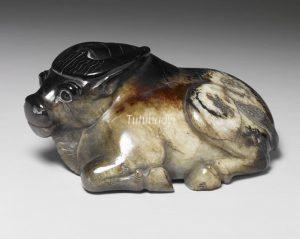
Fig 6: jade carving in the shape of an ox, Ming dynasty (1368–1644), courtesy of the National Palace Museum, Taipei
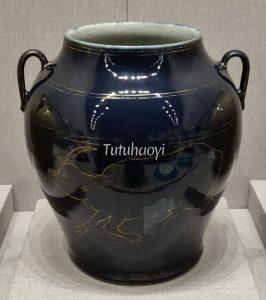
Fig 7: blue glazed vase with gilt decoration, Hongzhi period (1488–1505), Ming dynasty, courtesy of the Palace Museum, Beijing; Photograph by Rachel Ma
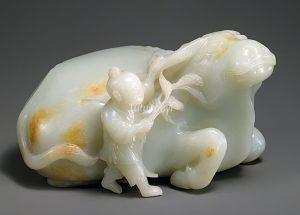
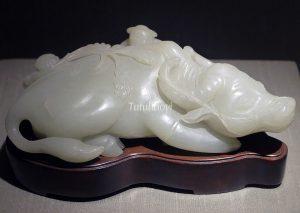
Fig 8: jade carving of a boy with a water buffalo, 18th century, Qing dynasty (1644–1911), courtesy of the Metropolitan Museum of Art, New York
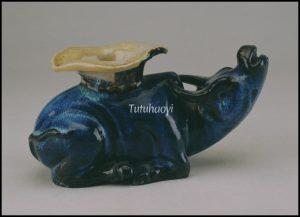
Fig 9: ceramic container in the shape of an ox, Shiwan Kiln, Qing dynasty (1644–1911), courtesy of the Palace Museum, Beijing
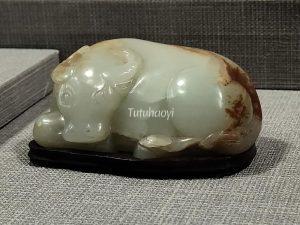
Fig 10: jade carving of an ox, Qing dynasty (1644–1911), courtesy of the National Palace Museum, Taipei; Photograph by Rachel Ma
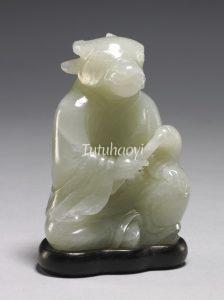
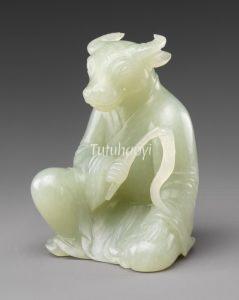
Fig 11: jade carving of the Chinese zodiac ox, Qing dynasty (1644–1911), courtesy of the National Palace Museum, Taipei
Fig 12: jade carving of the Chinese zodiac ox, Qing dynasty (1644–1911), courtesy of the Metropolitan Museum of Art, New York
Fig 13: jade carving of boys on a water buffalo, Qing dynasty (1644–1911), courtesy of Suzhou Museum, Jiangsu Province, China